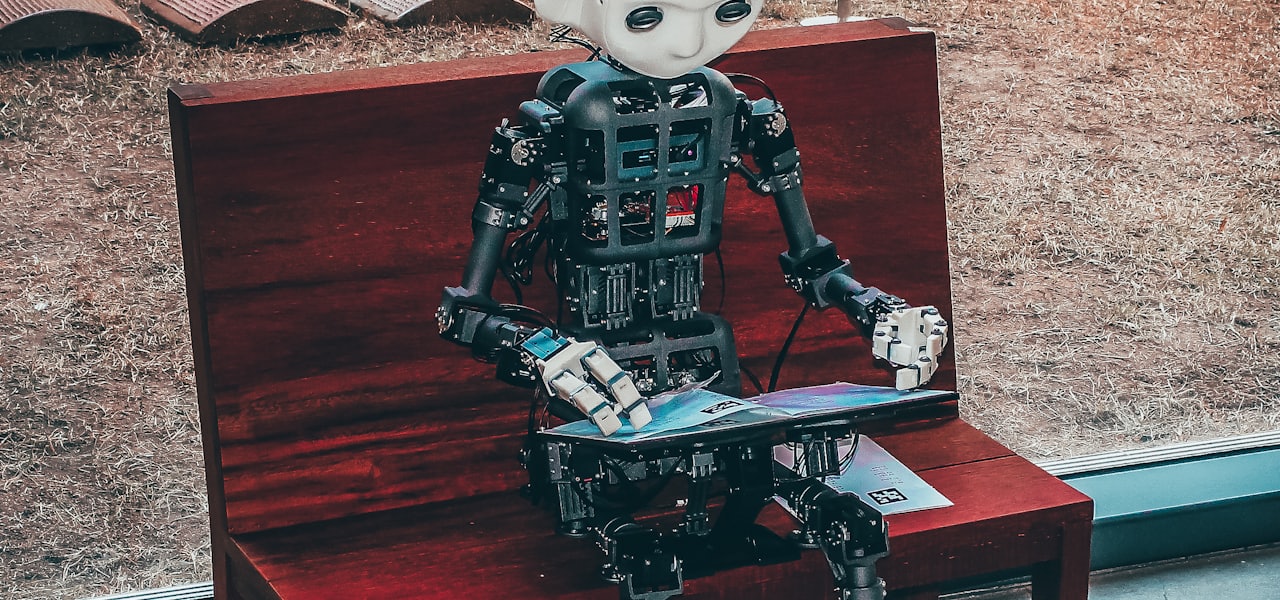
Organizational metacognition is knowing what an organization knows, a concept related to metacognition, organizational learning, the learning organization and sensemaking. It is used to describe how organizations and teams develop an awareness of their own thinking, learning how to learn, where awareness of ignorance can motivate learning. The organizational deutero-learning concept identified by Argyris and Schon defines when organizations learn how to carry out single-loop and double-loop learning. It has also been described as learning how to learn through a process of collaborative inquiry and reflection (evaluative inquiry). "When an organization engages in deutero-learning its members learn about the previous context for learning. They reflect on and inquire into previous episodes of organizational learning, or failure to learn. They discover what they did that facilitated or inhibited learning, they invent new strategies for learning, they produce these strategies, and they evaluate and generalize what they have produced" Learning what facilitates and inhibits learning enables organizations to develop new strategies to develop their knowledge. For example, identification of a gap between perceived performance (such as satisfaction) and actual performance (outcomes) creates an awareness that makes the organization understand that learning needs to occur, driving appropriate changes to the environment and processes. == Learning prototypes == Wijnhoven (2001) grouped four learning prototypes that best meet learning needs, the match between these needs and learning norms dictating an organization's learning capabilities; deutero-learning is the acquisition of these capabilities. knowledge gap analysis classification of problems to select operationally required knowledge and skills coping with organizational tremors and jolts by anticipation, response and adjustments of behavioural repertoires decisional uncertainty measurement == Terminological ambiguities == Organizational metacognition and organizational deutero-learning have both been described as the concept or phenomenon where organizations learn how to learn. Argyris and Schon (1978) place deutero-learning into their cognitive theory of action framework, neglecting aspects of adaptive behaviour and context core to Bateson's (1972) original definitions. In order to resolve terminological ambiguities, Visser (2007) reviewed and reformulated the concept of deutero-learning as, "the behavioral adaptation to patterns of conditioning in relationships in organizational contexts, distinguishing it from meta-learning and planned learning" (pg. 659). == Significance == Organizational metacognition is considered a key norm to the prescriptive concept of the learning organization. Its significance has been recognized by industry, the military and in disaster response. == Examples in practice == Examples of poor metacognition (deutero-learning) have been described in knowledge network environments, "Knowledge networking is important to most competitive enterprises today. Enterprise knowledge is becoming ever more specialized in nature, so no single person or organization can know everything in detail. Hence addressing complex, multidisciplinary problems requires developing and accessing a network of knowledgeable people and organizations. The problem is, many otherwise knowledgeable people and organizations are not fully aware of their knowledge networks, and even more problematic, they are not aware that they are not aware. This focuses our attention toward organizational metacognition."
Observability (software)
In software engineering, more specifically in distributed computing, observability is the ability to collect data about programs' execution, modules' internal states, and the communication among components. To improve observability, software engineers use a wide range of logging and tracing techniques to gather telemetry information, and tools to analyze and use it. Observability is foundational to site reliability engineering, as it is the first step in triaging a service outage. One of the goals of observability is to minimize the amount of prior knowledge needed to debug an issue. == Etymology, terminology and definition == The term is borrowed from control theory, where the "observability" of a system measures how well its state can be determined from its outputs. Similarly, software observability measures how well a system's state can be understood from the obtained telemetry (metrics, logs, traces, profiling). The definition of observability varies by vendor: Observability is the process of making a system’s internal state more transparent. Systems are made observable by the data they produce, which in turn helps you to determine if your infrastructure or application is healthy and functioning normally. a measure of how well you can understand and explain any state your system can get into, no matter how novel or bizarre [...] without needing to ship new code software tools and practices for aggregating, correlating and analyzing a steady stream of performance data from a distributed application along with the hardware and network it runs onobservability starts by shipping all your raw data to central service before you begin analysisthe ability to measure a system’s current state based on the data it generates, such as logs, metrics, and traces Observability is tooling or a technical solution that allows teams to actively debug their system. Observability is based on exploring properties and patterns not defined in advance. proactively collecting, visualizing, and applying intelligence to all of your metrics, events, logs, and traces—so you can understand the behavior of your complex digital system The term is frequently referred to as its numeronym o11y (where 11 stands for the number of letters between the first letter and the last letter of the word). This is similar to other computer science abbreviations such as i18n and l10n and k8s. === Observability vs. monitoring === Observability and monitoring are sometimes used interchangeably. As tooling, commercial offerings and practices evolved in complexity, "monitoring" was re-branded as observability in order to differentiate new tools from the old. The terms are commonly contrasted in that systems are monitored using predefined sets of telemetry, and monitored systems may be observable. Majors et al. suggest that engineering teams that only have monitoring tools end up relying on expert foreknowledge (seniority), whereas teams that have observability tools rely on exploratory analysis (curiosity). == Telemetry types == Observability relies on three main types of telemetry data: metrics, logs and traces. Those are often referred to as "pillars of observability". === Metrics === A metric is a point in time measurement (scalar) that represents some system state. Examples of common metrics include: number of HTTP requests per second; total number of query failures; database size in bytes; time in seconds since last garbage collection. Monitoring tools are typically configured to emit alerts when certain metric values exceed set thresholds. Thresholds are set based on knowledge about normal operating conditions and experience. Metrics are typically tagged to facilitate grouping and searchability. Application developers choose what kind of metrics to instrument their software with, before it is released. As a result, when a previously unknown issue is encountered, it is impossible to add new metrics without shipping new code. Furthermore, their cardinality can quickly make the storage size of telemetry data prohibitively expensive. Since metrics are cardinality-limited, they are often used to represent aggregate values (for example: average page load time, or 5-second average of the request rate). Without external context, it is impossible to correlate between events (such as user requests) and distinct metric values. === Logs === Logs, or log lines, are generally free-form, unstructured text blobs that are intended to be human readable. Modern logging is structured to enable machine parsability. As with metrics, an application developer must instrument the application upfront and ship new code if different logging information is required. Logs typically include a timestamp and severity level. An event (such as a user request) may be fragmented across multiple log lines and interweave with logs from concurrent events. === Traces === ==== Distributed traces ==== A cloud native application is typically made up of distributed services which together fulfill a single request. A distributed trace is an interrelated series of discrete events (also called spans) that track the progression of a single user request. A trace shows the causal and temporal relationships between the services that interoperate to fulfill a request. Instrumenting an application with traces means sending span information to a tracing backend. The tracing backend correlates the received spans to generate presentable traces. To be able to follow a request as it traverses multiple services, spans are labeled with unique identifiers that enable constructing a parent-child relationship between spans. Span information is typically shared in the HTTP headers of outbound requests. === Continuous profiling === Continuous profiling is another telemetry type used to precisely determine how an application consumes resources. === Instrumentation === To be able to observe an application, telemetry about the application's behavior needs to be collected or exported. Instrumentation means generating telemetry alongside the normal operation of the application. Telemetry is then collected by an independent backend for later analysis. In fast-changing systems, instrumentation itself is often the best possible documentation, since it combines intention (what are the dimensions that an engineer named and decided to collect?) with the real-time, up-to-date information of live status in production. Instrumentation can be automatic, or custom. Automatic instrumentation offers blanket coverage and immediate value; custom instrumentation brings higher value but requires more intimate involvement with the instrumented application. Instrumentation can be native - done in-code (modifying the code of the instrumented application) - or out-of-code (e.g. sidecar, eBPF). Verifying new features in production by shipping them together with custom instrumentation is a practice called "observability-driven development". == "Pillars of observability" == Metrics, logs and traces are most commonly listed as the pillars of observability. Majors et al. suggest that the pillars of observability are high cardinality, high-dimensionality, and explorability, arguing that runbooks and dashboards have little value because "modern systems rarely fail in precisely the same way twice." == Self monitoring == Self monitoring is a practice where observability stacks monitor each other, in order to reduce the risk of inconspicuous outages. Self monitoring may be put in place in addition to high availability and redundancy to further avoid correlated failures.
Commit (data management)
In computer science and data management, a commit is a behavior that marks the end of a transaction and provides Atomicity, Consistency, Isolation, and Durability (ACID) in transactions. The submission records are stored in the submission log for recovery and consistency in case of failure. In terms of transactions, the opposite of committing is giving up tentative changes to the transaction, which is rolled back. Due to the rise of distributed computing and the need to ensure data consistency across multiple systems, commit protocols have been evolving since their emergence in the 1970s. The main developments include the Two-Phase Commit (2PC) first proposed by Jim Gray, which is the fundamental core of distributed transaction management. Subsequently, the Three-phase Commit (3PC), Hypothesis Commit (PC), Hypothesis Abort (PA), and Optimistic Commit protocols gradually emerged, solving the problems of blocking and fault recovery. Today, new fields such as e-commerce payment and blockchain technology are emerging, and submission protocols play a significant role in various business areas. By effectively handling transactions, resolving faults and recovering problems, the commit protocol becomes crucial in ensuring the reliability and consistency of data management. == History == The concept of Commit originated in the late 1960s and early 1970s, when computer technology was rapidly advancing and data management was becoming an important requirement in business and finance. Enterprises have gradually replaced the traditional paper records with computers, which has fully improved the work efficiency. The reliability and consistency of data have become a necessary requirement. Transaction management at this stage is relatively simple, limited to using a single computer for processing. It merely effectively records the changes in data to ensure that the data remains stable after the transaction is completed or terminated. In the late 1970s, as database systems moved from a single calculator operation to multiple distributed collaborations, ensuring data consistency and reliability became a new challenge. In 1978, computer scientist Jim Gray proposed the famous two-phase Commit Protocol (2PC), which became an effective solution for distributed transaction management, successfully managing data synchronization problems between multiple nodes. However, this commit protocol has some potential transaction blocking problems when nodes fail. In the early 1980s, researchers discovered that although the two-step commit protocol was effective at synchronizing data, there could be long waits and even system crashes, with limitations. To improve this problem, people have begun to explore new and effective methods, including enhancing efficiency by reducing message communication during the protocol process. IBM's R database introduced the Assumed Commit and Assumed abort protocols, which contributed significantly to transaction management efficiency. These two protocols have greatly improved the processing efficiency of distributed transactions by reducing communication overhead and have become an important breakthrough in the technology of transaction commit protocols. By the early 1990s, with the increase in business demands and the complexity of transactions, enterprises required higher efficiency in distributed transaction processing. In order to adapt to the needs of different environments, the scientific community has gradually developed various variants of commit protocols to provide more flexible transaction management options for different needs. For example, the three-phase commit protocol promotes the commit of transactions more effectively and reduces the occurrence of blocking problems by adding a pre-commit protocol and a timeout mechanism. In the 21st century, with the popularization of mobile Internet and wireless technology, the commit protocol has been further developed, and researchers have begun to pay attention to how to reduce the blocking in the transaction process to solve the problem of broadband limitation, battery life and network instability in the mobile environment. The proposal of optimistic commit protocol marks the extension of commit technology from traditional database to the emerging mobile data field. This protocol allows transactions to temporarily use unconfirmed data, improving the user experience in cases of poor network conditions. In recent years, with the rise of blockchain and decentralized technologies, submission protocols and consensus mechanisms have gradually merged. These consensus algorithms play a role in tamper-proofing and preventing malicious attacks on node pairs in a decentralized environment. This enables commit to no longer be confined to the scope of traditional database management, but to become the core technology of trust computing and distributed ledgers, further expanding the application field of commit in the digital age. This integration has brought about extensive application impacts. Each transaction can achieve the effect of tracking global submissions through the verification of the consensus mechanism, becoming an important technical foundation for promoting the circulation of digital assets, the operation of cryptocurrencies and decentralized applications. == Commit Protocol Types == In the world of data management, a transaction is a series of database operations, such as bank transfers and order submission. In order to ensure the accuracy, consistency, and security of the data, transactions are usually completed completely, or cancelled completely, leaving no partially completed results. Commit protocol is the method used to coordinate this process. Different protocols are applicable to different submission scenarios and have their own advantages and disadvantages. There are four major commit protocols. === Two-Phase Commit (2PC) === The two-phase commit protocol is the most classic and broadest approach to distributed transactions, which includes both a preparation phase and a commit phase. This commit protocol is designed to allow the database coordinator to determine if all participating nodes agree. The preparation phase is the phase in which the coordination node sends a ready to commit request to all nodes participating in the transaction. The commit phase is a global commit after all participating nodes are ready, and if no agreement is reached, all nodes roll back the transaction and undo all previous operations. Although the two-phase commit protocol is the easiest to operate and widely used, its obvious drawback is that it can cause transactions to be blocked for a long time when nodes fail, resulting in a decline in system performance and making it difficult to terminate or continue immediately. === Three-Phase Commit (3PC) === The three-phase commit protocol is an improved non-blocking protocol based on 2PC, which is divided into three stages: preparation, pre-commit and commit. Firstly, each node sends a "preparation" request. After confirmation, a "pre-submission" stage is added. At this point, each node has completed most of the preparatory work and is waiting for the final confirmation. Finally, in the formal commit stage, after all nodes send the "commit" request, the transaction is completed and committed. Compared with 2PC, it increases the timeout mechanism, avoids the blocking problem caused by single point of failure, and improves the reliability of the system. The three-phase commit protocol significantly optimizes transaction reliability, but adds additional overhead for message transmission and state maintenance. It is more suitable for distributed application scenarios with high transaction sensitivity and no acceptance of long waiting times. === Presumed Commit (PC) and Presumed Abort (PA) === Presumed Commit (PC) is the default that the transaction will be committed successfully and rollback will be notified unless an anomaly is encountered. This commit reduces the message overhead and logging costs of a normal commits. Presumed Abort (PA) is assumed that the default state of the transaction is a rollback and will only be committed when all nodes have explicitly agreed. This commit is applicable to transactions that are not updated frequently or have a low probability of successful commit. The IBM R Distributed Database management System was the first to propose and practice the PC and PA protocols, handling distributed transaction management very efficiently and becoming a classic case in the field of database transaction management. === Optimistic Commit Protocol === With the rise of the Internet, the previous commit protocols are facing new challenges, especially in mobile scenarios with unstable networks. Excessively long transaction waiting times can affect the user experience. The Optimistic Commit Protocol allows a transaction to temporarily access uncommitted data before committing to avoid wait times. This type of commit is suitable f
Electronic lab notebook
An electronic lab notebook or electronic laboratory notebook (ELN) is a computer program designed to replace paper laboratory notebooks. Lab notebooks in general are used by scientists, engineers, and technicians to document research, experiments, and procedures performed in a laboratory. A lab notebook is often maintained to be a legal document and may be used in a court of law as evidence. Similar to an inventor's notebook, the lab notebook is also often referred to in patent prosecution and intellectual property litigation. Electronic lab notebooks offer many benefits to the user as well as organizations; they are easier to search upon, simplify data copying and backups, and support collaboration amongst many users. ELNs can have fine-grained access controls, and can be more secure than their paper counterparts. They also allow the direct incorporation of data from instruments, replacing the practice of printing out data to be stapled into a paper notebook. == Types == ELNs can be divided into two categories: "Specific ELNs" contain features designed to work with specific applications, scientific instrumentation or data types. "Cross-disciplinary ELNs" or "Generic ELNs" are designed to support access to all data and information that needs to be recorded in a lab notebook. Lab Platforms that combine an ELN, LIMS, and scientific data management together, all-in-one configurable software environment. Solutions range from specialized programs designed from the ground up for use as an ELN, to modifications or direct use of more general programs. Examples of using more general software as an ELN include using OpenWetWare, a MediaWiki install (running the same software that Wikipedia uses), WordPress, or the use of general note taking software such as OneNote as an ELN. ELN's come in many different forms. They can be standalone programs, use a client-server model, or be entirely web-based. Some use a lab-notebook approach, others resemble a blog. ELNs are embracing artificial intelligence and LLM technology to provide scientific AI chat assistants. A good many variations on the "ELN" acronym have appeared. Differences between systems with different names are often subtle, with considerable functional overlap between them. Examples include "ERN" (Electronic Research Notebook), "ERMS" (Electronic Resource (or Research or Records) Management System (or Software) and SDMS (Scientific Data (or Document) Management System (or Software). Ultimately, these types of systems all strive to do the same thing: Capture, record, centralize and protect scientific data in a way that is highly searchable, historically accurate, and legally stringent, and which also promotes secure collaboration, greater efficiency, reduced mistakes and lowered total research costs. == Objectives == A good electronic laboratory notebook should offer a secure environment to protect the integrity of both data and process, whilst also affording the flexibility to adopt new processes or changes to existing processes without recourse to further software development. The package architecture should be a modular design, so as to offer the benefit of minimizing validation costs of any subsequent changes that you may wish to make in the future as your needs change. A good electronic laboratory notebook should be an "out of the box" solution that, as standard, has fully configurable forms to comply with the requirements of regulated analytical groups through to a sophisticated ELN for inclusion of structures, spectra, chromatograms, pictures, text, etc. where a preconfigured form is less appropriate. All data within the system may be stored in a database (e.g. MySQL, MS-SQL, Oracle) and be fully searchable. The system should enable data to be collected, stored and retrieved through any combination of forms or ELN that best meets the requirements of the user. The application should enable secure forms to be generated that accept laboratory data input via PCs and/or laptops / palmtops, and should be directly linked to electronic devices such as laboratory balances, pH meters, etc. Networked or wireless communications should be accommodated for by the package which will allow data to be interrogated, tabulated, checked, approved, stored and archived to comply with the latest regulatory guidance and legislation. A system should also include a scheduling option for routine procedures such as equipment qualification and study related timelines. It should include configurable qualification requirements to automatically verify that instruments have been cleaned and calibrated within a specified time period, that reagents have been quality-checked and have not expired, and that workers are trained and authorized to use the equipment and perform the procedures. == Regulatory and legal aspects == The laboratory accreditation criteria found in the ISO 17025 standard needs to be considered for the protection and computer backup of electronic records. These criteria can be found specifically in clause 4.13.1.4 of the standard. Electronic lab notebooks used for development or research in regulated industries, such as medical devices or pharmaceuticals, are expected to comply with FDA regulations related to software validation. The purpose of the regulations is to ensure the integrity of the entries in terms of time, authorship, and content. Unlike ELNs for patent protection, FDA is not concerned with patent interference proceedings, but is concerned with avoidance of falsification. Typical provisions related to software validation are included in the medical device regulations at 21 CFR 820 (et seq.) and Title 21 CFR Part 11. Essentially, the requirements are that the software has been designed and implemented to be suitable for its intended purposes. Evidence to show that this is the case is often provided by a Software Requirements Specification (SRS) setting forth the intended uses and the needs that the ELN will meet; one or more testing protocols that, when followed, demonstrate that the ELN meets the requirements of the specification and that the requirements are satisfied under worst-case conditions. Security, audit trails, prevention of unauthorized changes without substantial collusion of otherwise independent personnel (i.e., those having no interest in the content of the ELN such as independent quality unit personnel) and similar tests are fundamental. Finally, one or more reports demonstrating the results of the testing in accordance with the predefined protocols are required prior to release of the ELN software for use. If the reports show that the software failed to satisfy any of the SRS requirements, then corrective and preventive action ("CAPA") must be undertaken and documented. Such CAPA may extend to minor software revisions, or changes in architecture or major revisions. CAPA activities need to be documented as well. Aside from the requirements to follow such steps for regulated industry, such an approach is generally a good practice in terms of development and release of any software to assure its quality and fitness for use. There are standards related to software development and testing that can be applied (see ref.).
Pivot to video
"Pivot to video" is a phrase referring to the trend, starting in 2015, of media publishing companies cutting staff resources for written content (generally published on their own web sites) in favor of short-form video content (often published on third-party platforms such as Facebook, Instagram, Twitter, YouTube, Snapchat, and TikTok). These moves were generally presented by publishers as a response to changes in social media traffic or to changes in the media consumption habits of younger audiences. However, many media commentators have argued that this shift was primarily motivated by advertising revenue, and that only advertisers, not consumers, prefer video over text. The pivot's contribution to job loss in the media industry has given the phrase "pivot to video" an association with decline, especially in a business context. Commentators have also noted a lack of transparency and accuracy in the viewership metrics reported by platforms such as Facebook, pointing out that abrupt shifts in platforms' proprietary algorithms can have devastating effects on publishers' viewership, traffic, and revenue. Following a scandal in which Facebook revealed it had artificially inflated numbers to its advertisers about how long viewers watched ads, many journalists and industry analysts concluded that the shift to video was based on such misleading or inaccurate metrics, which created a false impression that there was customer demand for additional video content. == History == Streaming media technology has been available since the early 1990s, though it was relatively low-fidelity and not widely available until the mid-2000s. In 2007, traditional media publishers including the New York Times, Washington Post and Time Inc. created new divisions to develop web videos, and Facebook launched its video platform. Twitter purchased micro-video service Vine in October 2012, began adding native video streaming in late 2014, and acquired video-streaming service Periscope in January 2015. An August 2014 profile on BuzzFeed noted the publisher's large investment into video production, and observed that "the future of BuzzFeed may not even be on BuzzFeed.com. One of the company’s nascent ideas, BuzzFeed Distributed, will be a team of 20 people producing content that lives entirely on other popular platforms, like Tumblr, Instagram or Snapchat." On 7 January 2015, Facebook issued a statement about "the shift to video," reporting that "since June 2014, Facebook has averaged more than 1 billion video views every day." Media critic John Herrman argued that "What the shift to Facebook video means is that Facebook is more interested in hosting the things media companies make than just spreading them, that it views links to outside pages as a problem to be solved, and that it sees Facebook-hosted video as an example of the solution." In February 2015, the digital video-journalism publisher NowThis announced that it would operate without a home page, producing content to be published directly on social media platforms. In April 2016, Mashable fired much of its editorial staff, attempting to pivot away from hard news coverage while "growing Mashable across every platform" and doubling down on branded content and video. By December 2017, following a sale to Ziff Davis, Mashable retreated from this focus on video; Bernard Gershon, president of GershonMedia, said that the announcement of many such "pivots" were actually aimed primarily at investors. By 2017, "advertiser interest in video [was] insatiable... Any CFO is going to say 'How can we get more video?'" according to an executive of the publishers' trade association Digital Content Next. Publishers such as Vanity Fair, the Washington Post, and Sports Illustrated began adapting their own articles into cheap video content, either dictated by a newsreader or animated as a slideshow with captions, which could be shared on social platforms or even played alongside the articles themselves. June 2017 saw numerous high-profile pivots to video. Vocativ laid off at least 20 staff, including its entire newsroom, explaining that "as the industry evolves, we are undertaking a strategic shift to focus exclusively on video content that will be distributed via social media and other platforms." Fox Sports eliminated its entire writing staff to focus on creating "premium video across all platforms." And MTV News announced a restructuring that would cut its writing team. Less than two years earlier, MTV News had hired Grantland co-founder Dan Fierman to lead a significant investment in "longform" political and cultural reporting, but Fierman left in April 2017, and in June MTV announced it was "shifting resources into short-form video content more in line with young people's media consumption habits." In July, Vice Media laid off at least 60 employees, including the editor-in-chief of Vice Sports, while expanding video production. August 2017 saw Mic cut ten writers and directed the remainder of the newsroom to generate videos for social platforms. CEO Chris Altchek said "When you think about how many hours people spend watching video versus reading, the audience has already spoken." The move was ultimately unsuccessful, and Mic laid off the majority of its staff a year later before being sold to Bustle Media Group for a fraction of its former value. In September 2017, the for-profit wiki-hosting company Fandom began adding commercially produced videos to its otherwise user-generated wiki subdomains, explicitly citing the need to "keep up with user and advertiser expectations" by "diversifying our content," claiming without substantiation that "consumer patterns are changing," necessitating the addition of "complementary video" to accommodate that supposed need. Objection to the content in these videos and its sharp contrast against the content of the wiki sites to which they were applied led to vocal user backlash, leading Fandom CCO Dorth Raphaely to offer the following non-committal response: "I agree that with these videos in particular we did not deliver the right type of content experience." Movie Pilot CEO Tobi Bauckhage explained his company's fall 2017 layoffs as part of moving "from a text-based publishing model to video... a reaction to the fact that Facebook has changed their algorithms in favor of video instead of referral traffic over the last 12 months and we were losing money in the publishing bit of our business." As part of the company's change in direction, the majority of its staff was laid off and its parent company was sold to Webedia. In November 2017, magazine publisher Condé Nast cut jobs, reduced the frequency of several magazines, and shut down the print edition of Teen Vogue, then invested significant new resources in video production, with a senior executive saying "In the next 24 months, I hope that video is half our business... It’s critical. It’s the macro trend of content consumption." In February 2018, Vox Media cut approximately 50 employees, primarily those assigned to "social video," as Vox CEO Jim Bankoff admitted that those efforts were not "viable audience or revenue growth drivers." In August 2020, Facebook Inc. (now Meta Platforms) pivoted Instagram to video in an effort to replicate the success of TikTok and appeal to a younger audience, introducing "reels" as a form of video and promoting them aggressively. Reels accounted more than half the 20 most-viewed posts on Facebook; however, most of these reels were anonymous aggregations of content from TikTok. Elon Musk declared in early 2024 that X (formerly Twitter) was now a "video-first platform", which has been described by critics as a "pivot to video". == As euphemism == In 2017, Journalist Brian Feldman said that "'Pivoting to video' has become a business strategy for digital publishers common enough in recent months to be a kind of cliché — a slick way to describe something else: layoffs." In response, writers use the phrase as gallows humor shorthand for death or cancellation, as in "how do i tell my bf i want our relationship to pivot to video" (SkyNews' Mollie Goodfellow) or "Horse broke its leg, so we had to take it out back and help it 'pivot to video'" (blogger Anil Dash). == Facebook metrics controversy == In September 2016, Facebook admitted that it had reported artificially inflated numbers to its advertisers about how long viewers watched ads leading to an overestimation of 60-80%. Plaintiffs in a later court case allege the discrepancy was as high as 150-900%. Facebook apologized in an official statement and in multiple staff appearances at New York Advertising Week. Two months later, Facebook disclosed additional discrepancies in audience metrics. In October 2018, a California federal court unsealed the text of a class action lawsuit filed by advertisers against Facebook, alleging that Facebook had known since 2015 that its viewership numbers were highly inflated, that internal records showed it "was far from an hon
Client honeypot
Honeypots are security devices whose value lie in being probed and compromised. Traditional honeypots are servers (or devices that expose server services) that wait passively to be attacked. Client Honeypots are active security devices in search of malicious servers that attack clients. The client honeypot poses as a client and interacts with the server to examine whether an attack has occurred. Often the focus of client honeypots is on web browsers, but any client that interacts with servers can be part of a client honeypot (for example ftp, email, ssh, etc.). There are several terms that are used to describe client honeypots. Besides client honeypot, which is the generic classification, honeyclient is the other term that is generally used and accepted. However, there is a subtlety here, as "honeyclient" is actually a homograph that could also refer to the first known open source client honeypot implementation (see below), although this should be clear from the context. == Architecture == A client honeypot is composed of three components. The first component, a queuer, is responsible for creating a list of servers for the client to visit. This list can be created, for example, through crawling. The second component is the client itself, which is able to make a requests to servers identified by the queuer. After the interaction with the server has taken place, the third component, an analysis engine, is responsible for determining whether an attack has taken place on the client honeypot. In addition to these components, client honeypots are usually equipped with some sort of containment strategy to prevent successful attacks from spreading beyond the client honeypot. This is usually achieved through the use of firewalls and virtual machine sandboxes. Analogous to traditional server honeypots, client honeypots are mainly classified by their interaction level: high or low; which denotes the level of functional interaction the server can utilize on the client honeypot. In addition to this there are also newly hybrid approaches which denotes the usage of both high and low interaction detection techniques. == High interaction == High interaction client honeypots are fully functional systems comparable to real systems with real clients. As such, no functional limitations (besides the containment strategy) exist on high interaction client honeypots. Attacks on high interaction client honeypots are detected via inspection of the state of the system after a server has been interacted with. The detection of changes to the client honeypot may indicate the occurrence of an attack against that has exploited a vulnerability of the client. An example of such a change is the presence of a new or altered file. High interaction client honeypots are very effective at detecting unknown attacks on clients. However, the tradeoff for this accuracy is a performance hit from the amount of system state that has to be monitored to make an attack assessment. Also, this detection mechanism is prone to various forms of evasion by the exploit. For example, an attack could delay the exploit from immediately triggering (time bombs) or could trigger upon a particular set of conditions or actions (logic bombs). Since no immediate, detectable state change occurred, the client honeypot is likely to incorrectly classify the server as safe even though it did successfully perform its attack on the client. Finally, if the client honeypots are running in virtual machines, then an exploit may try to detect the presence of the virtual environment and cease from triggering or behave differently. === Capture-HPC === Capture [1] is a high interaction client honeypot developed by researchers at Victoria University of Wellington, NZ. Capture differs from existing client honeypots in various ways. First, it is designed to be fast. State changes are being detected using an event based model allowing to react to state changes as they occur. Second, Capture is designed to be scalable. A central Capture server is able to control numerous clients across a network. Third, Capture is supposed to be a framework that allows to utilize different clients. The initial version of Capture supports Internet Explorer, but the current version supports all major browsers (Internet Explorer, Firefox, Opera, Safari) as well as other HTTP aware client applications, such as office applications and media players. === HoneyClient === HoneyClient [2] is a web browser based (IE/FireFox) high interaction client honeypot designed by Kathy Wang in 2004 and subsequently developed at MITRE. It was the first open source client honeypot and is a mix of Perl, C++, and Ruby. HoneyClient is state-based and detects attacks on Windows clients by monitoring files, process events, and registry entries. It has integrated the Capture-HPC real-time integrity checker to perform this detection. HoneyClient also contains a crawler, so it can be seeded with a list of initial URLs from which to start and can then continue to traverse web sites in search of client-side malware. === HoneyMonkey (dead since 2010) === HoneyMonkey [3] is a web browser based (IE) high interaction client honeypot implemented by Microsoft in 2005. It is not available for download. HoneyMonkey is state based and detects attacks on clients by monitoring files, registry, and processes. A unique characteristic of HoneyMonkey is its layered approach to interacting with servers in order to identify zero-day exploits. HoneyMonkey initially crawls the web with a vulnerable configuration. Once an attack has been identified, the server is reexamined with a fully patched configuration. If the attack is still detected, one can conclude that the attack utilizes an exploit for which no patch has been publicly released yet and therefore is quite dangerous. === SHELIA (dead since 2009) === Shelia [4] is a high interaction client honeypot developed by Joan Robert Rocaspana at Vrije Universiteit Amsterdam. It integrates with an email reader and processes each email it receives (URLs & attachments). Depending on the type of URL or attachment received, it opens a different client application (e.g. browser, office application, etc.) It monitors whether executable instructions are executed in data area of memory (which would indicate a buffer overflow exploit has been triggered). With such an approach, SHELIA is not only able to detect exploits, but is able to actually ward off exploits from triggering. === UW Spycrawler === The Spycrawler [5] developed at the University of Washington is yet another browser based (Mozilla) high interaction client honeypot developed by Moshchuk et al. in 2005. This client honeypot is not available for download. The Spycrawler is state based and detects attacks on clients by monitoring files, processes, registry, and browser crashes. Spycrawlers detection mechanism is event based. Further, it increases the passage of time of the virtual machine the Spycrawler is operating in to overcome (or rather reduce the impact of) time bombs. === Web Exploit Finder === WEF [6] is an implementation of an automatic drive-by-download – detection in a virtualized environment, developed by Thomas Müller, Benjamin Mack and Mehmet Arziman, three students from the Hochschule der Medien (HdM), Stuttgart during the summer term in 2006. WEF can be used as an active HoneyNet with a complete virtualization architecture underneath for rollbacks of compromised virtualized machines. == Low interaction == Low interaction client honeypots differ from high interaction client honeypots in that they do not utilize an entire real system, but rather use lightweight or simulated clients to interact with the server. (in the browser world, they are similar to web crawlers). Responses from servers are examined directly to assess whether an attack has taken place. This could be done, for example, by examining the response for the presence of malicious strings. Low interaction client honeypots are easier to deploy and operate than high interaction client honeypots and also perform better. However, they are likely to have a lower detection rate since attacks have to be known to the client honeypot in order for it to detect them; new attacks are likely to go unnoticed. They also suffer from the problem of evasion by exploits, which may be exacerbated due to their simplicity, thus making it easier for an exploit to detect the presence of the client honeypot. === HoneyC === HoneyC [7] is a low interaction client honeypot developed at Victoria University of Wellington by Christian Seifert in 2006. HoneyC is a platform independent open source framework written in Ruby. It currently concentrates driving a web browser simulator to interact with servers. Malicious servers are detected by statically examining the web server's response for malicious strings through the usage of Snort signatures. === Monkey-Spider (dead since 2008) === Monkey-Spider [8] is a low-interaction client honeypot i
ESign (India)
Aadhaar eSign is an online electronic signature service in India to facilitate an Aadhaar holder to digitally sign a document. The signature service is facilitated by authenticating the Aadhaar holder via the Aadhaar-based e-KYC (electronic Know Your Customer) service. To eSign a document, one has to have an Aadhaar card and a mobile number registered with Aadhaar. With these two things, an Indian citizen can sign a document remotely without being physically present. == Procedure == The notification issued by Government of India in this regard stipulates the following procedure for the e-authentication using Aadhaar e-KYC services. Authentication of an electronic record by e-authentication technique, which shall be done by the applicable use of e-authentication, hash function, and asymmetric cryptosystem techniques, leading to issuance of digital signature certificate by Certifying Authority, a trusted third party service by subscriber's key pair generation, storing of the key pairs on hardware security module and creation of digital signature provided that the trusted third party shall be offered by the certifying authority (the trusted third party shall send application form and certificate signing request to the Certifying Authority for issuing a digital signature certificate to the subscriber), issuance of digital signature certificate by Certifying Authority shall be based on e-authentication, particulars given in the prescribed format, digitally signed verified information from Aadhaar e-KYC services and electronic consent of digital signature certificate applicant, the manner and requirements for e-authentication shall be as issued by the Controller from time to time, the security procedure for creating the subscriber's key pair shall be in accordance with the e-authentication guidelines issued by the Controller, the standards referred to in rule 6 of the Information Technology (Certifying Authorities) Rules, 2000 shall be complied with, in so far as they relate to the certification function of public key of Digital Signature Certificate applicant, and the manner in which information is authenticated by means of digital signature shall comply with the standards specified in rule 6 of the Information Technology (Certifying Authorities) Rules, 2000 in so far as they relate to the creation, storage and transmission of Digital Signature. == eSign Service Providers == Organisations and individuals seeking to obtain the eSigning Service can utilize the services of various service providers. There are empanelled service providers with whom organisations can register as an Application Service Prover after submitting the requisite documents, getting UAT access, building the application around the service and going through an IT Audit by an CERT-IN empanelled auditor. However, the process of registering as an Application Service Provider is cumbersome, and requires huge investments of time, money and resources in complying with the regulations and building a suitable application. Most organisations prefer using services of plug-n-play gateway providers who take the responsibility of complying with the regulations, hence simplifying the process for the market.